
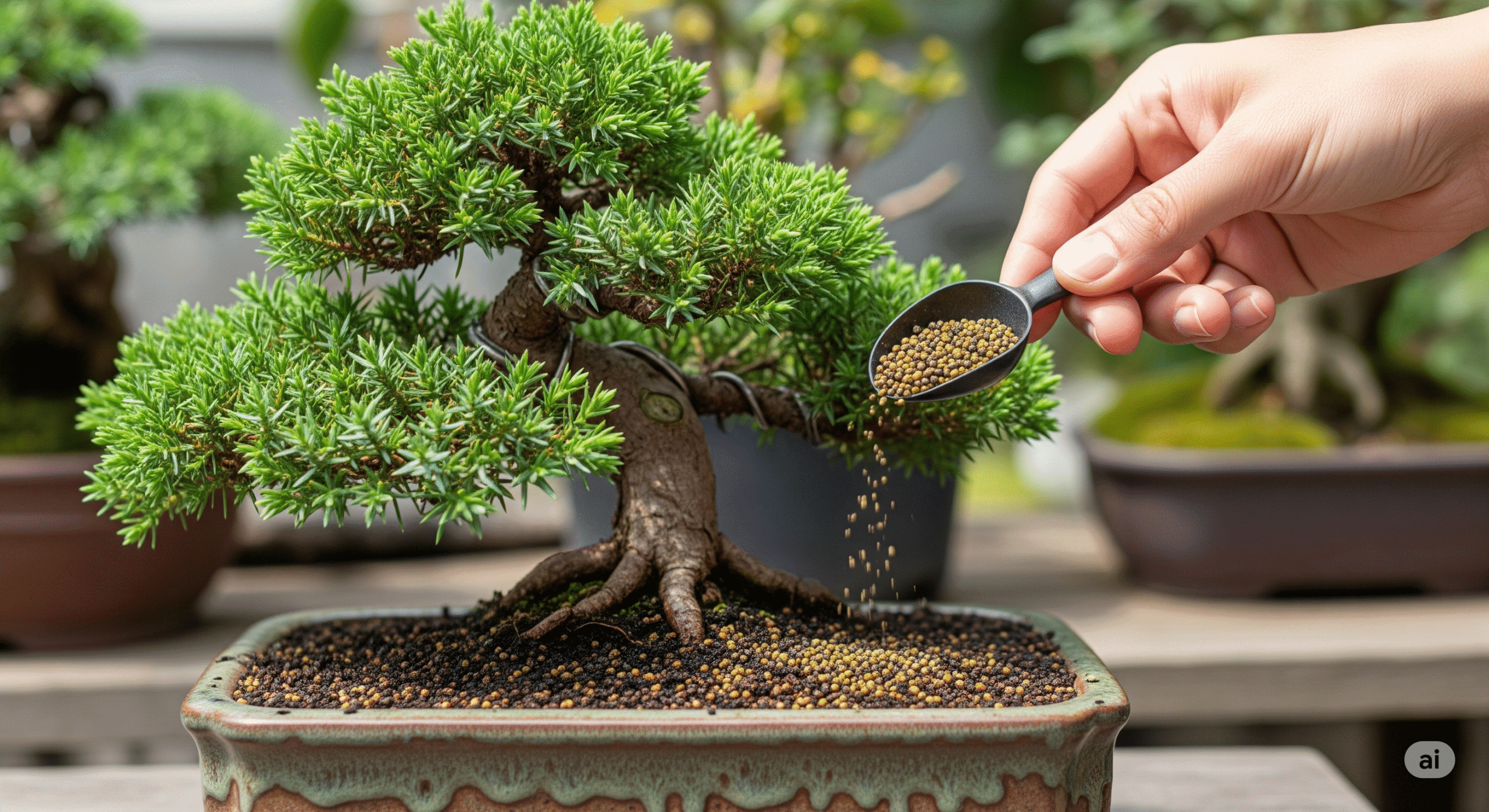
Is your Juniper bonsai growing slowly or losing its vibrant green color? It might be missing one key thing: the right kind of fertilizer at the right time.
Fertilizing your Juniper bonsai isn’t just about boosting growth. It’s essential for strong roots, healthy foliage, and long-term survival—especially in a small pot where nutrients are limited.
In this post, you’ll learn exactly when and how to fertilize your Juniper bonsai tree for the best results. We’ll cover what fertilizer to use, how often to apply it, and how to do it safely through each season. Plus, you’ll learn how to spot signs of over- or under-fertilizing and choose between organic and synthetic options.
Why Fertilizing Your Juniper Bonsai Is Important
Your Juniper bonsai needs more than just water and sunlight. Because it lives in a small pot, it can’t pull enough nutrients from the soil on its own.
Fertilizing gives your tree the extra help it needs to grow strong and stay healthy. Without it, your bonsai may grow slowly, turn pale, or become weak over time.
Here’s why fertilizing matters:
- Boosts growth: Fertilizer gives the tree nitrogen, phosphorus, and potassium—key nutrients for strong growth.
- Strengthens roots: A healthy root system helps the tree absorb water and stay stable.
- Keeps foliage green: Good nutrition helps the needles stay rich in color and full in shape.
- Supports overall health: It helps your tree resist stress, disease, and poor weather conditions.
Juniper bonsai trees grow slowly, but they still need steady care. Fertilizer fills in the gap when soil alone isn’t enough.
Best Time of Year to Fertilize
The best time to fertilize a Juniper bonsai is during its active growing season—spring through early fall. This is when the tree uses the most energy and needs extra nutrients.
Avoid fertilizing in winter. During cold months, Junipers go dormant and don’t need extra food. Fertilizing at the wrong time can stress the tree or even damage it.
Fertilizing schedule by season
- Spring (March–May): Start fertilizing when new growth appears. This helps kickstart healthy growth after winter.
- Summer (June–August): Continue feeding regularly, but reduce if the weather gets too hot.
- Fall (September–October): Apply low-nitrogen fertilizer to prepare the tree for winter.
- Winter (November–February): Stop fertilizing completely. Let the tree rest.
Fertilizing at the right time helps your Juniper bonsai grow properly without risk of damage or nutrient waste.
How Often Should You Fertilize?
How often you fertilize your Juniper bonsai depends on the season and the type of fertilizer you use. Regular feeding helps the tree grow well, but too much can hurt it.
General rule: Fertilize every 2 to 4 weeks during the growing season (spring to fall). Do not fertilize in winter.
Frequency by fertilizer type
- Liquid fertilizer: Every 2 weeks (dilute it to half-strength to avoid burning)
- Slow-release pellets: Every 4 to 6 weeks (reapply as they break down)
- Organic fertilizers: Every 3 to 4 weeks (they release nutrients slowly)
Tip: Always adjust based on your tree’s health and the weather. In very hot or dry weather, fertilize less often.
How to Apply Fertilizer Safely
Fertilizing your Juniper bonsai the right way is just as important as choosing the right type. Safe application prevents root burn, leaf damage, or nutrient overload. Follow these steps to fertilize safely:
1. Water First
Make sure the soil is damp before you apply fertilizer. Dry roots can burn if fertilizer is added to dry soil.
2. Use the Right Amount
Follow the instructions on the fertilizer package. Use less than recommended if you’re unsure—it’s safer to under-fertilize than overdo it.
3. Choose the Right Spot
Apply the fertilizer evenly around the base of the tree—not directly on the trunk or leaves. This helps avoid damage.
4. Clean Off Leaves
If any fertilizer lands on the foliage, gently rinse it off with water.
5. Watch Your Tree
After fertilizing, monitor your bonsai. Look for signs of stress like yellowing needles or wilting. These can be signs of overfeeding.
Safety tips
- Never fertilize dry soil: Always water first.
- Avoid feeding during stress: Don’t fertilize right after repotting or pruning.
- Store fertilizers safely: Keep away from pets and children.
Safe fertilizing keeps your bonsai healthy, happy, and growing strong.
Seasonal Fertilizing Tips (Spring, Summer, Fall, Winter)
Juniper bonsai trees have different needs in each season. Adjusting your fertilizing routine helps your tree stay healthy all year. Here’s how to feed your bonsai in each season:
Spring (March–May)
- Start feeding when you see new buds or shoots.
- Use balanced fertilizer (equal parts nitrogen, phosphorus, potassium like 10-10-10).
- Feed every 2–3 weeks to support strong growth.
Summer (June–August)
- Keep fertilizing regularly, but reduce if it’s very hot.
- Use half-strength if your tree looks stressed from heat.
- Avoid fertilizing during a heatwave or drought.
Fall (September–October)
- Switch to low-nitrogen fertilizer (like 3-10-10) to strengthen roots.
- Feed once a month to help prepare for winter dormancy.
- Stop feeding by late October in most climates.
Winter (November–February)
- Do not fertilize at all. The tree is resting and won’t use the nutrients.
- Let your bonsai rest until signs of spring growth return.
Feeding based on the season helps your Juniper bonsai grow at the right pace without stress.
Signs of Over-Fertilizing or Under-Fertilizing
Too much or too little fertilizer can harm your Juniper bonsai. Knowing the signs helps you fix problems early.
Signs of Over-Fertilizing
- Yellow or brown needle tips: This may mean the roots are burned.
- White crust on soil surface: This could be salt buildup from fertilizer.
- Drooping or weak growth: Too many nutrients can overload the plant.
- Leaf drop or root rot: Can happen when overfeeding damages the root system.
Signs of Under-Fertilizing
- Slow or stunted growth: The tree isn’t getting enough nutrients.
- Pale or dull green foliage: Lack of nitrogen can cause weak color.
- Thinning branches: Poor nutrition can lead to fewer and weaker shoots.
- Weak overall health: The tree may get sick more easily.
What to do?
If you think you over-fertilized, flush the soil with clean water and skip the next feeding. If the tree looks underfed, slowly increase fertilizer frequency and watch for improvement.
Organic vs. Synthetic Fertilizers: What to Choose
Choosing between organic and synthetic fertilizer depends on your goals and how much control you want over your Juniper bonsai’s growth.
Both types feed your tree, but they work in different ways. Understanding the difference helps you make the best choice.
Organic Fertilizers
Organic fertilizers come from natural sources like plants, animal waste, or minerals. They release nutrients slowly as they break down in the soil.
Pros of organic fertilizer:
- Gentle on roots: Less risk of burning the tree.
- Improves soil: Adds microbes and organic matter.
- Long-lasting: Feeds the tree over time.
Cons:
- Slower results: Takes longer to show effects.
- Mild smell: Some types may have a natural odor.
- Less control: Harder to measure exact nutrient levels.
Synthetic Fertilizers
Synthetic (or chemical) fertilizers are man-made and give nutrients in exact amounts. They work quickly and are easy to find in garden stores.
Pros of synthetic fertilizer:
- Fast results: The tree can use nutrients right away.
- Easy to measure: You know exactly what you’re giving.
- Good for quick fixes: Helps if your tree looks weak or pale.
Cons:
- Higher risk of root burn: Especially if overused.
- Doesn’t improve soil: Adds no organic matter.
- Can build up salts: Needs flushing over time.
Which Should You Choose?
- Use organic if you prefer slow, steady growth and healthy soil.
- Use synthetic if you want fast results and easy control.
- Many bonsai growers use a mix of both, depending on the season and tree’s condition.
Choose the type that fits your routine and your tree’s needs best. Either one can work well with the right care.
Frequently Asked Questions (FAQs)
Here are some quick answers to common questions about fertilizing Juniper bonsai trees.
Can I use regular garden fertilizer on my Juniper bonsai?
Yes, but only if it’s well-balanced and diluted. Bonsai trees are sensitive, so use a mild mix—half strength or less—to avoid burning the roots.
Is fish emulsion good for Juniper bonsai?
Yes. Fish emulsion is an organic fertilizer that works well for bonsai. It’s rich in nitrogen and promotes green, healthy foliage. Use it in spring and early summer.
What happens if I forget to fertilize my Juniper bonsai?
If you skip a few feedings, your tree may grow slower or look pale. It won’t die right away, but long-term lack of nutrients can weaken the tree.
Can I fertilize right after repotting my bonsai?
No. After repotting, wait 2 to 4 weeks before fertilizing. Let the roots settle first, or you may stress the tree.
How do I know when to stop fertilizing in the fall?
Stop once the weather cools and the tree stops growing. In most places, that’s around late October.
Conclusion
Fertilizing your Juniper bonsai is key to helping it grow strong, healthy, and vibrant. The small pot doesn’t hold many nutrients, so regular feeding is a must during the growing season.
By knowing when and how to fertilize, what type to use, and how to spot signs of over- or underfeeding, you can give your tree the best care possible—season by season.
Want your bonsai to thrive for years? Keep a simple routine, observe your tree, and stay consistent. If you found this guide helpful, feel free to share it or explore more bonsai care tips!